One of the first tricks in Penn and Teller's Las Vegas show begins when Teller—the short, quiet one—strolls onstage with a lit cigarette, inhales, drops it to the floor, and stamps it out. Then he takes another cigarette from his suit pocket and lights it.
No magic there, right? But then Teller pivots so the audience can see him from the other side. He goes through the same set of motions, except this time everything is different: Much of what just transpired, the audience now perceives, was a charade, a carefully orchestrated stack of lies. He doesn't stamp out the first cigarette—he palms it, then puts it in his ear. There is no second cigarette; it's a pencil stub. The smoke from the first butt is real, but the lighter used on the pencil is actually a flashlight. Yet the illusion is executed so perfectly that every step looks real, even when you're shown that it is not.
The trick is called Looks Simple, and the point is that even a puff on a cigarette, closely examined, can disintegrate into smoke and mirrors. "People take reality for granted," Teller says shortly before stepping onstage. "Reality seems so simple. We just open our eyes and there it is. But that doesn't mean it is simple."
For Teller (that's his full legal name), magic is more than entertainment. He wants his tricks to reveal the everyday fraud of perception so that people become aware of the tension between what is and what seems to be. Our brains don't see everything—the world is too big, too full of stimuli. So the brain takes shortcuts, constructing a picture of reality with relatively simple algorithms for what things are supposed to look like. Magicians capitalize on those rules. "Every time you perform a magic trick, you're engaging in experimental psychology," Teller says. "If the audience asks, 'How the hell did he do that?' then the experiment was successful. I've exploited the efficiencies of your mind."
Now that on-the-job experimentation has taken an academic turn. A couple of years ago, Teller joined a coterie of illusionists and tricksters recruited by Stephen Macknik and Susana Martinez-Conde, researchers at the Barrow Neurological Institute in Phoenix, Arizona, to look at the neuroscience of magic. Last summer, that work culminated in an article for the journal Nature Reviews Neuroscience called "Attention and Awareness in Stage Magic." Teller was one of the coauthors, and its publication was a signal event in a field some researchers are calling magicology, the mining of stage illusions for insights into brain function.
"Tricks work only because magicians know, at an intuitive level, how we look at the world," says Macknik, lead author of the paper. "Even when we know we're going to be tricked, we still can't see it, which suggests that magicians are fooling the mind at a very deep level." By reverse-engineering these deceptions, Macknik hopes to illuminate the mental loopholes that make us see a woman get sawed in half or a rabbit appear out of thin air even when we know such stuff is impossible. "Magicians were taking advantage of these cognitive illusions long before any scientist identified them," Martinez-Conde says.
Penn and Teller are an n of 1 in American culture: avant-garde artists who perform for the Vegas masses, skeptical philosophers who somehow got a cable TV show. For the past 25 years, they've played the same characters onstage. Teller is the silent, impish illusionist—"People are always surprised that I can speak," he says—while Penn is the hyperkinetic impresario, juggling knives, teasing the audience, and swallowing fire. These personae reflect the men's offstage personalities. Penn Jillette is 6'7", with a mane of curly black hair. When he walks, he pounds the floor like a clown in oversize shoes—not surprising, since he graduated from the Ringling Bros. and Barnum & Bailey Clown College. Teller is nearly a foot shorter and dresses in dapper three-piece suits. He has an eerie grace, as if he can move without displacing air.
The two started performing together in 1975, playing Philadelphia street corners and Renaissance festivals. Along with a third artist, they called themselves the Asparagus Valley Cultural Society, an absurdist act that mixed knife-juggling with "unusual and disgusting" classical music. They were not especially popular. "I always assumed I'd spend my life happily performing in artsy-fartsy little theaters," Teller says.
After their first Renaissance gig, where Teller performed in tights and Penn in leather, they were headed back to New Jersey. To kill some time in a diner, Teller was practicing his version of Cups and Balls, a classic sleight-of-hand trick popularized by ancient Roman conjurers. It involves a series of "vanishes" and "transpositions" as the balls appear and disappear underneath the cups. Teller hadn't brought any props, so he used wadded-up napkins and clear water glasses.
Somehow, this made the trick even better. Although it was now possible to follow the crumpled napkins as Teller variously palmed them, squished them, and moved them from cup to cup, the illusion persisted. "The eye could see the moves, but the mind could not comprehend them," he says. "Giving the trick away gave nothing away, because you still couldn't grasp it." They eventually worked this version of Cups and Balls into their show, and audiences loved it. But the magic community—whose cardinal rule is "Don't tell 'em how it's done"—reacted with outrage and even threats of physical violence. Penn and Teller were exposing an ancient secret! Two arty geeks were destroying the mystery!
All that criticism got press attention, which made people want to see Penn and Teller even more. Before long, they were performing Cups and Balls on Letterman. The trick became a centerpiece of their first off-Broadway show. "It was so liberating to be able to treat the audience like intelligent adults," Teller says. Instead of engaging in the "usual hocus-pocus clichés," the clear cups forced the crowd to confront the real source of the illusion: the hard-wired limitations of their own brains. Because people were literally incapable of perceiving the sleight of hand—Teller's fingers just moved too fast—it didn't matter that the glasses were transparent.
Penn and Teller still perform Cups and Balls—it's one of the few old bits in their current Vegas show. Several of their other pieces take a more direct cue from research on perception. In the Cowboy trick, an individual from the crowd is given a video camera; Penn says he's going to make a tiny plastic cow disappear from his hand, and he asks the audience member to film the vanish as the feed is projected onto a large screen for the rest of the room. While the mark focuses on Penn's flamboyant hand gestures—and the impertinently nonvanishing cow—Teller rearranges the entire stage in plain view. The audience cracks up; even when the poor sap looks up from the viewfinder, he fails to notice that anything is different.
"The idea for this trick came straight from science," Teller says. "We thought it would be fun to show people how bad they are at noticing stuff." Called change blindness, the phenomenon is illustrated in a video (on YouTube) that inspired the duo. Shot in 2007 by British psychologist Richard Wiseman, it ostensibly documents a simple card trick—the backs of the cards in a deck are magically transformed from blue to red. But during the course of the video, Wiseman's shirt, his assistant's shirt, the tablecloth, and the backdrop all change color, too. Most viewers watch the card trick unspool and miss the other alterations. Attention, it turns out, is like a spotlight. When it's focused on something, we become oblivious to even obvious changes outside its narrow beam. What magicians do, essentially, is misdirect—pivot that spotlight toward the wrong place at the right time.
During Penn and Teller's show, the audience laughs at the patsy onstage. But that part of the act is clearly intended as an indictment of human perception. "The irony," Teller says, "is that what we're doing to the volunteer is the same thing we've been doing to the crowd all night."
Teller designed his own house in the Las Vegas foothills, and he delights in showing first-time visitors around. He starts the tour by pointing down a hallway at a window, through which I see a beautiful view of the sprawling neon city below.
"Go take a look," Teller says. I amble down the hall and—just before reaching the end—smack into something hard, leaving a wet mouth-print on polished glass. The "window" is merely a reflection; the hallway ends in a precisely angled, mirrored door. "You didn't see the illusion because you weren't expecting one," Teller says. "You assumed I wasn't fucking with your head and that this hallway is actually a normal hallway. Those assumptions work great until you walk into a wall."
The fake window is only the beginning. The house also has a bookcase that's actually a door, lightbulbs that appear to change color mysteriously, and a bronze bear statue that tells you what card you're thinking of. After demonstrating that last prank, Teller watches as I try in vain to figure out how it's done. He relishes the confusion of his audience—and even fellow illusionists: "I had Criss Angel over here; he couldn't figure out how the bear worked, either." Unless Teller sees the symptoms of astonishment—mouth agape, eyes widened, pupils dilated—he doesn't consider the trick a success. "The magic show is a competition," he says. "The audience is trying to figure you out. They aren't suspending their disbelief—they're trying to expose you as a scam artist." This is what makes magic so difficult: The magician must sell people a lie even as they know they're being lied to. Unless the illusion feels more real than the truth, there is no magic.
What's surprising is just how limited the repertoire of magical illusions actually is. The Nature Reviews Neuroscience paper lists nine fundamental "conjuring effects" of modern magic, from the vanish and the restoration to telekinesis and ESP. While these basic tricks have been varied endlessly—you can "restore" a cut rope, a sawed-in-half assistant, a shredded piece of paper—each of the effects relies on a specific perceptual phenomenon. This may be why exposing the "secret" of a magic trick is so often deflating. Most of the time, the secret is that we're gullible and our brains are riddled with blind spots.
This isn't just the stuff of magic shows; those perceptual phenomena also allow us to make sense of reality, as we translate the blur of photons hitting our retinas into a coherent world of three-dimensional forms.
Consider a technique used by the legendary pickpocket Apollo Robbins, another coauthor of the Nature article spearheaded by Macknik and Martinez-Conde. When the researchers asked him about his devious methods—how he could steal the wallet of a man who knew he was going to have his pocket picked—they learned something surprising: Robbins said the trick worked only when he moved his free hand in an arc instead of a straight line. According to the thief, these arcs distract the eyes of his victims for a matter of milliseconds, just enough time for his other hand to pilfer their belongings.
At first, the scientists couldn't explain this phenomenon. Why would arcs keep us from looking at the right place? But then they began to think about saccades, movements of the eye that can precede conscious decisions about where to turn one's gaze. Saccades are among the fastest movements produced by the human body, which is why a pickpocket has to trick them: The eyes are in fact quicker than the hands. "This is an idea scientists had never contemplated before," Macknik says. "It turns out, though, that the pickpocket was onto something." When we see a hand moving in a straight line, we automatically look toward the end point—this is called the pursuit system. A hand moving in a semicircle, however, seems to short-circuit our saccades. The arc doesn't tell our eyes where the hand is going, so we fixate on the hand itself—and fail to notice the other hand reaching into our pocket. "The pickpocket has found a weakness in the way we perceive motion," Macknik says. "Show the eyes an arc and they move differently."
While the magicians are educating the scientists, so far the scientists haven't offered much in return. Cowboy trick aside, Teller says, "this is an example of entertainers getting there first." And he wishes it weren't so. Teller hopes that laboratory insights will offer ways to break free of the stale tricks that have defined magic for decades—much as new technologies made possible the illusions of David Abbott in the early 20th century. A loan shark in Omaha, Nebraska, Abbott performed innovative, late-night shows in his living room. (Harry Houdini was one of many magicians who made the pilgrimage.) "Abbott used to say he wasn't satisfied with a trick unless people began to weep," Teller says. "He was that good."
Abbott's audiences were practically preindustrial—all it took to fool them into thinking that spirits move among us was a radio receiver wired into a papier-màché teakettle. Today's consumers of illusion are both hungrier for deception and savvier about its practice, a dichotomy due in no small part to Penn and Teller's own acts over the years. Teller has spent enough time with researchers to think they might be the key to an entirely new category of stage magic—that the quirks and flaws of perception uncovered in the lab can be commercialized, essentially, into illusions for an ever more sophisticated audience. "Maybe I'll learn something from these scientists," he says with a wry smile. "Maybe one of their discoveries will inspire a new kind of illusion. Maybe that's how I'll make people cry." Until he shows them how it's done.
http://www.wired.com/science/discoveries/magazine/17-05/ff_neuroscienceofmagic
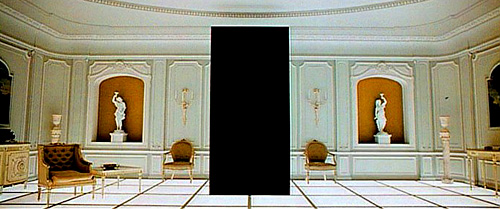
The strangest monument in America looms over a barren knoll in northeastern Georgia. Five massive slabs of polished granite rise out of the earth in a star pattern. The rocks are each 16 feet tall, with four of them weighing more than 20 tons apiece. Together they support a 25,000-pound capstone. Approaching the edifice, it's hard not to think immediately of England's Stonehenge or possibly the ominous monolith from 2001: A Space Odyssey. Built in 1980, these pale gray rocks are quietly awaiting the end of the world as we know it.
Called the Georgia Guidestones, the monument is a mystery—nobody knows exactly who commissioned it or why. The only clues to its origin are on a nearby plaque on the ground—which gives the dimensions and explains a series of intricate notches and holes that correspond to the movements of the sun and stars—and the "guides" themselves, directives carved into the rocks. These instructions appear in eight languages ranging from English to Swahili and reflect a peculiar New Age ideology. Some are vaguely eugenic (guide reproduction wisely—improving fitness and diversity); others prescribe standard-issue hippie mysticism (prize truth—beauty—love—seeking harmony with the infinite).
What's most widely agreed upon—based on the evidence available—is that the Guidestones are meant to instruct the dazed survivors of some impending apocalypse as they attempt to reconstitute civilization. Not everyone is comfortable with this notion. A few days before I visited, the stones had been splattered with polyurethane and spray-painted with graffiti, including slogans like "Death to the new world order." This defacement was the first serious act of vandalism in the Guidestones' history, but it was hardly the first objection to their existence. In fact, for more than three decades this uncanny structure in the heart of the Bible Belt has been generating responses that range from enchantment to horror. Supporters (notable among them Yoko Ono) have praised the messages as a stirring call to rational thinking, akin to Thomas Paine's The Age of Reason. Opponents have attacked them as the Ten Commandments of the Antichrist.
Whoever the anonymous architects of the Guidestones were, they knew what they were doing: The monument is a highly engineered structure that flawlessly tracks the sun. It also manages to engender endless fascination, thanks to a carefully orchestrated aura of mystery. And the stones have attracted plenty of devotees to defend against folks who would like them destroyed. Clearly, whoever had the monument placed here understood one thing very well: People prize what they don't understand at least as much as what they do.
The story of the Georgia Guidestones began on a Friday afternoon in June 1979, when an elegant gray-haired gentleman showed up in Elbert County, made his way to the offices of Elberton Granite Finishing, and introduced himself as Robert C. Christian. He claimed to represent "a small group of loyal Americans" who had been planning the installation of an unusually large and complex stone monument. Christian had come to Elberton—the county seat and the granite capital of the world—because he believed its quarries produced the finest stone on the planet.
Joe Fendley, Elberton Granite's president, nodded absently, distracted by the rush to complete his weekly payroll. But when Christian began to describe the monument he had in mind, Fendley stopped what he was doing. Not only was the man asking for stones larger than any that had been quarried in the county, he also wanted them cut, finished, and assembled into some kind of enormous astronomical instrument.
What in the world would it be for? Fendley asked. Christian explained that the structure he had in mind would serve as a compass, calendar, and clock. It would also need to be engraved with a set of guides written in eight of the world's major languages. And it had to be capable of withstanding the most catastrophic events, so that the shattered remnants of humanity would be able to use those guides to reestablish a better civilization than the one that was about to destroy itself.
Fendley is now deceased, but shortly after the Guidestones went up, an Atlanta television reporter asked what he was thinking when he first heard Christian's plan. "I was thinking, 'I got a nut in here now. How am I going get him out?'" Fendley said. He attempted to discourage the man by quoting him a price several times higher than for any project commissioned there before. The job would require special tools, heavy equipment, and paid consultants, Fendley explained. But Christian merely nodded and asked how long it would take. Fendley didn't rightly know—six months, at least. He wouldn't be able to even consider such an undertaking, he added, until he knew it could be paid for. When Christian asked whether there was a banker in town he considered trustworthy, Fendley saw his chance to unload the strange man and sent him to look for Wyatt Martin, president of the Granite City Bank.
The tall and courtly Martin—the only man in Elberton besides Fendley known to have met R. C. Christian face-to-face—is now 78. "Fendley called me and said, 'A kook over here wants some kind of crazy monument,'" Martin says. "But when this fella showed up he was wearing a very nice, expensive suit, which made me take him a little more seriously. And he was well-spoken, obviously an educated person." Martin was naturally taken aback when the man told him straight out that R. C. Christian was a pseudonym. He added that his group had been planning this secretly for 20 years and wanted to remain anonymous forever. "And when he told me what it was he and this group wanted to do, I just about fell over," Martin says. "I told him, 'I believe you'd be just as well off to take the money and throw it out in the street into the gutters.' He just sort of looked at me and shook his head, like he felt kinda sorry for me, and said, 'You don't understand.'"
Martin led Christian down the street to the town square, where the city had commissioned a towering Bicentennial Memorial Fountain, which included a ring of 13 granite panels, each roughly 2 by 3 feet, signifying the original colonies. "I told him that was about the biggest project ever undertaken around here, and it was nothing compared to what he was talking about," Martin says. "That didn't seem to bother him at all." Promising to return on Monday, the man went off to charter a plane and spend the weekend scouting locations from the air. "By then I half believed him," Martin says.
When Christian came back to the bank Monday, Martin explained that he could not proceed unless he could verify the man's true identity and "get some assurance you can pay for this thing." Eventually, the two negotiated an agreement: Christian would reveal his real name on the condition that Martin promise to serve as his sole intermediary, sign a confidentiality agreement pledging never to disclose the information to another living soul, and agree to destroy all documents and records related to the project when it was finished. "He said he was going to send the money from different banks across the country," Martin says, "because he wanted to make sure it couldn't be traced. He made it clear that he was very serious about secrecy."
Before leaving town, Christian met again with Fendley and presented the contractor with a shoe box containing a wooden model of the monument he wanted, plus 10 or so pages of detailed specifications. Fendley accepted the model and instructions but remained skeptical until Martin phoned the following Friday to say he had just received a $10,000 deposit. After that, Fendley stopped questioning and started working. "My daddy loved a challenge," says Fendley's daughter, Melissa Fendley Caruso, "and he said this was the most challenging project in the history of Elbert County."
Construction of the Guidestones got under way later that summer. Fendley's company lovingly documented the progress of the work in hundreds of photographs. Jackhammers were used to gouge 114 feet into the rock at Pyramid Quarry, searching for hunks of granite big enough to yield the final stones. Fendley and his crew held their breath when the first 28-ton slab was lifted to the surface, wondering if their derricks would buckle under the weight. A special burner (essentially a narrowly focused rocket motor used to cut and finish large blocks of granite) was trucked to Elberton to clean and size the stones, and a pair of master stonecutters was hired to smooth them.
Fendley and Martin helped Christian find a suitable site for the Guidestones in Elbert County: a flat-topped hill rising above the pastures of the Double 7 Farms, with vistas in all directions. For $5,000, owner Wayne Mullinex signed over a 5-acre plot. In addition to the payment, Christian granted lifetime cattle-grazing rights to Mullinex and his children, and Mullinex's construction company got to lay the foundation for the Guidestones.
With the purchase of the land, the Guidestones' future was set. Christian said good-bye to Fendley at the granite company office, adding, "You'll never see me again." Christian then turned and walked out the door—without so much as a handshake.
From then on, Christian communicated solely through Martin, writing a few weeks later to ask that ownership of the land and monument be transferred to Elbert County, which still holds it. Christian reasoned that civic pride would protect it over time. "All of Mr. Christian's correspondence came from different cities around the country," Martin says. "He never sent anything from the same place twice."
The astrological specifications for the Guidestones were so complex that Fendley had to retain the services of an astronomer from the University of Georgia to help implement the design. The four outer stones were to be oriented based on the limits of the sun's yearly migration. The center column needed two precisely calibrated features: a hole through which the North Star would be visible at all times, and a slot that was to align with the position of the rising sun during the solstices and equinoxes. The principal component of the capstone was a 7\8-inch aperture through which a beam of sunlight would pass at noon each day, shining on the center stone to indicate the day of the year.
The main feature of the monument, though, would be the 10 dictates carved into both faces of the outer stones, in eight languages: English, Spanish, Russian, Chinese, Arabic, Hebrew, Hindi, and Swahili. A mission statement of sorts (let these be guidestones to an age of reason) was also to be engraved on the sides of the capstone in Egyptian hieroglyphics, classical Greek, Sanskrit, and Babylonian cuneiform. The United Nations provided some of the translations (including those for the dead languages), which were stenciled onto the stones and etched with a sandblaster.
By early 1980, a bulldozer was scraping the Double 7 hilltop to bedrock, where five granite slabs serving as a foundation were laid out in a paddle-wheel design. A 100-foot-tall crane was used to lift the stones into place. Each of the outer rocks was 16 feet 4 inches high, 6 feet 6 inches wide, and 1 foot 7 inches thick. The center column was the same (except only half the width), and the capstone measured 9 feet 8 inches long, 6 feet 6 inches wide, and 1 foot 7 inches thick. Including the foundation stones, the monument's total weight was almost 240,000 pounds. Covered with sheets of black plastic in preparation for an unveiling on the vernal equinox, the Guidestones towered over the cattle that continued to graze beneath it at the approach of winter's end.
The monument ignited controversy before it was even finished. The first rumor began among members of the Elberton Granite Association, jealous of the attention being showered on one of their own: Fendley was behind the whole thing, they said, aided by his friend Martin, the banker. The gossip became so poisonous that the two men agreed to take a lie detector test at the Elberton Civic Center. The scandal withered when The Elberton Star reported that they had both passed convincingly, but the publicity brought a new wave of complaints. As word of what was being inscribed spread, Martin recalls, even people he considered friends asked him why he was doing the devil's work. A local minister, James Travenstead, predicted that "occult groups" would flock to the Guidestones, warning that "someday a sacrifice will take place here." Those inclined to agree were hardly discouraged by Charlie Clamp, the sandblaster charged with carving each of the 4,000-plus characters on the stones: During the hundreds of hours he spent etching the guides, Clamp said, he had been constantly distracted by "strange music and disjointed voices."
The unveiling on March 22, 1980, was a community celebration. Congressmember Doug Barnard, whose district contained Elberton, addressed a crowd of 400 that flowed down the hillside and included television news crews from Atlanta. Soon Joe Fendley was the most famous Elbertonian since Daniel Tucker, the 18th-century minister memorialized in the folk song "Old Dan Tucker." Bounded by the Savannah and Broad rivers but miles from the nearest interstate—"as rural as rural can be," in the words of current Star publisher Gary Jones—Elberton was suddenly a tourist destination, with visitors from all over the world showing up to see the Guidestones. "We'd have people from Japan and China and India and everywhere wanting to go up and see the monument," Martin says. And Fendley's boast that he had "put Elberton on the map" was affirmed literally in spring 2005, when National Geographic Traveler listed the Guidestones as a feature in its Geotourism MapGuide to Appalachia.
But many who read what was written on the stones were unsettled. Guide number one was, of course, the real stopper: maintain humanity under 500,000,000 in perpetual balance with nature. There were already 4.5 billion people on the planet, meaning eight out of nine had to go (today it would be closer to 12 out of 13). This instruction was echoed and expanded by tenet number two: guide reproduction wisely—improving fitness and diversity. It didn't take a great deal of imagination to draw an analogy to the practices of, among others, the Nazis. Guide number three instructed readers to unite humanity with a living new language. This sent a shiver up the spine of local ministers who knew that the Book of Revelations warned of a common tongue and a one-world government as the accomplishments of the Antichrist. Guide number four—rule passion—faith—tradition—and all things with tempered reason—was similarly threatening to Christians committed to the primacy of faith over all. The last six guides were homiletic by comparison. protect people and nations with fair laws and just courts. let all nations rule internally resolving external disputes in a world court. avoid petty laws and useless officials. balance personal rights with social duties. prize truth—beauty—love—seeking harmony with the infinite. be not a cancer on the earth—leave room for nature—leave room for nature.
Even as locals debated the relative merits of these commandments, the dire predictions of Travenstead seemed to be coming true. Within a few months, a coven of witches from Atlanta adopted the Guidestones as their home away from home, making weekend pilgrimages to Elberton to stage various pagan rites ("dancing and chanting and all that kind of thing," Martin says) and at least one warlock-witch marriage ceremony. No humans were sacrificed on the altar of the stones, but there are rumors that several chickens were beheaded. A 1981 article in the monthly magazine UFO Report cited Naunie Batchelder (identified in the story as "a noted Atlanta psychic") as predicting that the true purpose of the guides would be revealed "within the next 30 years." Viewed from directly overhead, the Guidestones formed an X, the piece in UFO Report observed, making for a perfect landing site.
Visitors kept coming, but after several failed investigations into the identity of R. C. Christian, the media lost interest. Curiosity flared again briefly in 1993, when Yoko Ono contributed a track called "Georgia Stone" to a tribute album for avant-garde composer John Cage, with Ono chanting the 10th and final guide nearly verbatim: "Be not a cancer on Earth—leave room for nature—leave room for nature." A decade later, however, when comedienne Roseanne Barr tried to work a bit on the Guidestones into her comeback tour, nobody seemed to care.
Christian kept in touch with Martin, writing the banker so regularly that they became pen pals. Occasionally, Christian would call from a pay phone at the Atlanta airport to say he was in the area, and the two would rendezvous for dinner in the college town of Athens, a 40-mile drive west of Elberton. By this time, Martin no longer questioned Christian's secrecy. The older man had successfully deflected Martin's curiosity when the two first met, by quoting Henry James' observations of Stonehenge: "You may put a hundred questions to these rough-hewn giants as they bend in grim contemplation of their fallen companions, but your curiosity falls dead in the vast sunny stillness that enshrouds them." Christian "never would tell me a thing about this group he belonged to," Martin says. The banker received his last letter from Christian right around the time of the 9/11 terrorist attacks and assumes the man—who would have been in his mid-eighties—has since passed away.
The mysterious story of R. C. Christian and the absence of information about the true meaning of the Guidestones was bound to become an irresistible draw for conspiracy theorists and "investigators" of all kinds. Not surprisingly, three decades later there is no shortage of observers rushing to fill the void with all sorts of explanations.
Among them is an activist named Mark Dice, author of a book called The Resistance Manifesto. In 2005, Dice (who was using a pseudonym of his own—"John Conner"—appropriated from the Terminator franchise's main character) began to demand that the Guidestones be "smashed into a million pieces." He claims that the monument has "a deep Satanic origin," a stance that has earned him plenty of coverage, both in print and on the Web. According to Dice, Christian was a high-ranking member of "a Luciferian secret society" at the forefront of the New World Order. "The elite are planning to develop successful life-extension technology in the next few decades that will nearly stop the aging process," Dice says, "and they fear that with the current population of Earth so high, the masses will be using resources that the elite want for themselves. The Guidestones are the New World Order's Ten Commandments. They're also a way for the elite to get a laugh at the expense of the uninformed masses, as their agenda stands as clear as day and the zombies don't even notice it."
Ironically, Dice's message has mainly produced greater publicity for the Guidestones. This, in turn, has brought fresh visitors to the monument and made Elbert County officials even less inclined to remove the area's only major tourist attraction.
Phyllis Brooks, who runs the Elbert County Chamber of Commerce, pronounced herself aghast last November when the Guidestones were attacked by vandals for the first time ever. While Dice denies any involvement in the assault, he seems to have inspired it: Spray-painted on the stones were messages like "Jesus will beat u satanist" and "No one world government." Other defacements asserted that the Council on Foreign Relations is "ran by the devil," that the 9/11 attacks were an inside job, and that President Obama is a Muslim. The vandals also splashed the Guidestones with polyurethane, which is much more difficult to remove than paint. Despite the graffiti's alignment with his views, Dice says he disapproves of the acts. "A lot of people were glad such a thing happened and saw it as standing up against the New World Order," Dice says, "while others who are unhappy with the stones saw the actions as counterproductive and inappropriate."
Martin winces every time he hears Dice's "Luciferian secret society" take on the Guidestones. But while he disagrees, he also admits that he doesn't know for sure. "All I can tell you is that Mr. Christian always seemed a very decent and sincere fella to me."
Dice, of course, is far from the only person with a theory about the Guidestones. Jay Weidner, a former Seattle radio commentator turned erudite conspiracy hunter, has heavily invested time and energy into one of the most popular hypotheses. He argues that Christian and his associates were Rosicrucians, followers of the Order of the Rosy Cross, a secret society of mystics that originated in late medieval Germany and claim understanding of esoteric truths about nature, the universe, and the spiritual realm that have been concealed from ordinary people. Weidner considers the name R. C. Christian an homage to the legendary 14th-century founder of the Rosicrucians, a man first identified as Frater C.R.C. and later as Christian Rosenkreuz. Secrecy, Weidner notes, has been a hallmark of the Rosicrucians, a group that announced itself to the world in the early 17th century with a pair of anonymous manifestos that created a huge stir across Europe, despite the fact that no one was ever able to identify a single member. While the guides on the Georgia stones fly in the face of orthodox Christian eschatology, they conform quite well to the tenets of Rosicrucianism, which stress reason and endorse a harmonic relationship with nature.
Weidner also has a theory about the purpose of the Guidestones. An authority on the hermetic and alchemical traditions that spawned the Rosicrucians, he believes that for generations the group has been passing down knowledge of a solar cycle that climaxes every 13,000 years. During this culmination, outsize coronal mass ejections are supposed to devastate Earth. Meanwhile, the shadowy organization behind the Guidestones is now orchestrating a "planetary chaos," Weidner believes, that began with the recent collapse of the US financial system and will result eventually in major disruptions of oil and food supplies, mass riots, and ethnic wars worldwide, all leading up to the Big Event on December 21, 2012. "They want to get the population down," Weidner says, "and this is what they think will do it. The Guidestones are there to instruct the survivors."
On hearing Weidner's ideas, Martin shakes his head and says it's "the sort of thing that makes me want to tell people everything I know." Martin has long since retired from banking and no longer lives in Elberton, yet he's still the Guidestones' official—and only—secret-keeper. "But I can't tell," the old man quickly adds. "I made a promise." Martin also made a promise to destroy all the records of his dealings with Christian, though he hasn't kept that one—at least not yet. In the back of his garage is a large plastic bin (actually, the hard-sided case of an IBM computer he bought back in 1983) stuffed with every document connected to the Guidestones that ever came into his possession, including the letters from Christian.
For years Martin thought he might write a book, but now he knows he probably won't. What he also won't do is allow me to look through the papers. When I ask whether he's prepared to take what he knows to his grave, Martin replies that Christian would want him to do just that: "All along, he said that who he was and where he came from had to be kept a secret. He said mysteries work that way. If you want to keep people interested, you can let them know only so much." The rest is enshrouded in the vast sunny stillness.
http://www.wired.com/science/discoveries/magazine/17-05/ff_guidestones